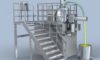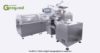
Tablets are part of our everyday life, whether it’s a stomach ache or migraine. But have you ever wondered how they get the accurate solid shape? That’s where a tablet press machine comes in! These devices quickly turn powder containing API and other ingredients into solid tablets that you can easily swallow with water or other recommended drinks. If you want to know more about a tablet press machine, its working, types, and benefits, keep reading!
Contents
A tablet press machine is often an automatic, continuous pharma production equipment that uses a punch and die to press powder and granular materials into round or other shapes. It ensures that each tablet has the same size and quantity to avoid dissatisfied customers.
Common applications of this machine are in the pharmaceutical and cosmetic industries to deliver drugs, vitamins, and other supplements. Here’s an overview of the different parts of a tablet press machine:
Hopper
The hopper is where you’ll pour all of your pharmaceutical powder or granules to compress them into tablets. It comes in different shapes and sizes to suit various types of products and is typically made of stainless steel.
Feeder
As the name implies, a feeder is responsible for delivering a precise amount of powder into the die cavity. It has feeder housing and feeder peddles that pave the way for a consistent and accurate flow of material.
Die and Punches
The die is a cavity inside the tablet press machine with a specific shape and size, and determines the final tablet dimensions. In addition, there are upper and lower punches that exert immense force on the material in the die to ensure you get the desired drug shape.
Cam Tracks
Cam tracks are also among the critical components of a tablet press machine, guiding the movement of upper and lower punches throughout the different stages of tablet production.
Ejection System
The ejection system pushes the tablets out of the machine via a discharge chute. You can then move on to process and package it for further shipping and storage.
Control Panel
A control panel is often a touch screen interface or buttons and dials connected to the machine’s programmable logic controllers (PLCs) and sensors. You can use it to:
Adjust critical parameters, including tablet weight and compression force, production speed, tablet dimensions, and fill depth.
Get real-time data on the machine’s speed and overall performance.
Detect and report tablet quality defects, ensuring your end customers get top-notch products.
Start, stop, and pause the tablet press as well as the different stages of the compression cycle.
Read Also: Capsule Filling Machines (Encapsulators)
Now that you are aware of the main components of a tablet press machine, here’s a detailed overview of its working so you can use it efficiently to maximize your production:
The process starts with the filling stage, where granulated powder is fed from the hopper into the die cavity using the feeder system.
Each time, the amount of powder going in is controlled to ensure the tablet has an accurate and uniform composition.
Now the upper and lower punches come into action, applying hydraulic pressure to compress the tablet and give it a unique shape.
After compression, the lower punch rises and ejects the newly formed tablet out of the machine. It’s then sent to the packaging line, where the tablet is either packed in bottles or blister packs.
When you go to purchase tablet press machines, you’ll come across different types, including:
Single Punch Tablet Press
A single-punch tablet press, also known as an eccentric press, is the simplest tablet press machine. It uses only one set of punches and dies. The working is simple: the upper punch compresses the tablet and the power punch ejects it.
That’s why they are more suitable for small-scale projects and R&D labs. Whether you want to press nutraceuticals or other dietary supplements, you can rely on the single-punch tablet press.
Rotary Tablet Press
As the name implies, the rotary tablet press is more advanced and features multiple sets of punches and dies arranged in a rotating turret. As the turret rotates, powder is filled into each die and it’s compressed in a continuous manner. Due to their high output efficiency, rotary tablet press machines are more suitable for large-scale industrial applications and OTC tablet production.
Multi-Layer Tablet Press
Multi-layer tablet press machines create tablets by sequentially compressing different layers of powders or granules. You can use them to make tablets with multiple distinct active ingredients and release profiles within a single unit.
So what happens is that when customers or patients take these tablets, the active ingredients are released at different times in different locations within the body. The common applications of these machines include making personalized medicines tailored to the unique needs of patients.
Tablet press machines are quickly growing in popularity and expected to reach a massive USD 2.6 billion by 2035. The major reasons behind these include high efficiency, precision, and easy customization. Let’s discuss them in detail:
Consistent Quality
Before customers can check the efficacy of a tablet, they look at the appearance. If the tablet has uniform and accurate dimensions, it radiates trust and prevents medical errors.
Statistics show that medication errors are among the most common medical errors, harming at least 1.5 million people every year.
One of the benefits of tablet press machines is that they ensure consistent drug quality. All the tablets processed have the same size, weight, and shape, so the end consumer feels satisfied.
Increased Production Efficiency
Tablet presses are very efficient and can produce large batches in way less time than traditional manual machines. For instance, some models are said to produce a few thousand to over 1.7 million tablets per hour. This enables you to quickly launch your products into the market, maintaining a competitive edge and meeting and exceeding consumer needs.
Reduced Waste
Due to manual errors, a lot of medications go to waste each year. This leads to high losses for the pharmaceutical companies. However, another benefit of tablet presses is that they significantly lower medication waste.
They feature powder metering, optimized tooling, and multi-station rotary presses, which prevent excess powder from being wasted. On top of this, regular maintenance and precise tooling minimize the number of rejected tablets.
Highly Customizable
Tablet presses are highly customizable, featuring things like interchangeable tooling for various shapes and sizes, and adjustable compression force as well as fill depth. You can use them to create various shapes, including oval, rectangular, and round, or customize them as per your liking.
Read Also: Major components of Softgel Encapsulating Machine
To make sure tablet press machines don’t seize or stop working midway, you should tend to proper maintenance. Here are some tips that help you in this regard:
Use a soft cloth to remove dust and debris from the tablet press surface. If the stains are stubborn, you should only rely on soft cleaning agents that don’t damage the machine’s components.
Inspect the punches and dies for signs of wear. If you notice they are damaged or don’t carry the product efficiently, you should replace them right away to avoid medicine wastage.
After a certain period, your tablet presses need to get realigned. This involves adjusting the compression force, speed, and other parameters.
Make sure that all the moving parts of the tablet press are properly lubricated. Consult the manufacturer’s instructions to determine the appropriate lubricants for your specific needs.
You should also double-check all the electrical systems, including control panels, cables, and sensors. Replace and repair all the damaged parts to minimize the risk of electrocution, which is quite common in the US. The National Library of Medicine reports that electrocutions kill 1,000 people every year.
Whether you follow a weekly, monthly, or quarterly maintenance schedule, you should properly document everything. You must pen down inspections, replacements, and calibrations to track the performance of each machine and plan the next maintenance accordingly.
The applications of tablet press machines are pretty diverse, ranging from nutraceuticals to pharmaceuticals and food supplements. Here’s an overview:
Pharmaceuticals: In pharmaceuticals, tablet presses are handy for the mass production of over-the-counter drugs, some prescription medications, antibiotics, and painkillers. Furthermore, it’s suitable for making chewable and effervescent tablets.
Nutraceuticals: Helps in the production of vitamins, minerals, herbal tablets, and other multi-layer dietary supplements having calcium, zinc, iron, and other necessary nutrients.
Food Industry: Apart from pharmaceuticals, tablet presses are common in the food industry, where you can use them to create candies, biscuits, and other sweet favours.
Chemical and Agricultural Industry: Tablet presses are also used to create fertilizer tablets and detergent blocks that are frequently used in automatic washing machines.
Choosing the right tablet press can be quite challenging. You need to consider various factors, including cost, types of machines, and brand reputation, before making a decision. But there’s nothing to worry about. Here are some tips that make the whole process easy for you:
Output Capacity
First things first, you should start by looking at the output capacity of the machine. It refers to the number of tablets that are usually ejected from the equipment and gives you an idea of whether you are making the right investment or not.
Let’s say you need to produce at least 50,000 tablets per hour. In that case, you should invest in a rotary tablet press and aim for a little higher capacity than needed for easy scaling.
Formulate Characteristics
Take into account the characteristics of the material you plan to use with the tablet presses. Are they free-flowing granules, fine powders, or sticky materials? What type of drugs do you aim to make?
Are they effervescent tablets or have sensitive ingredients that require specific humidity and temperature levels? Based on that, you can then narrow down options that are specifically designed to handle your product types.
Automation and Facility Requirements
Nowadays, most pharmaceutical companies are relying on automation to streamline daily tasks. Before you make a decision, consider the level of automation you desire.
Do you want a fully automatic tablet press or looking into semi-automatic options? Know that cost varies accordingly. In addition, make sure that the machine you choose fits well within the workspace without congestion.
Budget Considerations
While it’s natural to opt for the most high-end model, you shouldn’t overlook your budget and opt for the one that suits your finances and needs. For instance, if you are a small R&D lab, you can work with a semi-automatic and minimal output capacity tablet press.
However, if you belong to the industry, then a fully automatic and high-end machine is a must. Always balance cost with needs and make a wise decision. This might involve overlooking features such as automatic tooling changeovers or a touch screen.
Brand Reputation
Most importantly, ensure that the brand you choose to work with is reliable and has years of experience working in the industry. They should provide you with top-notch, certified equipment and incredible after-sales support. This assures that even if there’s an issue with the machine, you can get in touch with them to resolve it in a timely manner and avoid wasting your investment.
Read Also: Tablet Coating Machine
How to ensure uniform tablet weight and hardness?
To ensure uniform tablet weight and hardness, you must maintain proper powder flow, control compression forces, and regularly calibrate the machine.
Why does a tablet press machine need cleaning?
Tablet press machines need cleaning to avoid cross-contamination that might impact the efficacy of the tablet. Therefore, you should clean them after every production batch run and offer quality products to customers.
What safety features should a good tablet press have?
A good tablet press should have emergency stop buttons, overload protection, guarding systems, interlocks, and dust extraction features to maintain product quality and workers’ safety.
Tablet press machines are indeed an incredible addition to the traditional pharmaceutical production setup. However, when using them, you should keep an eye on common problems such as capping, lamination sticking, and weight variation, and handle them in a timely manner. If the machine stops working altogether, you can also contact the manufacturer and get it repaired or replaced, especially if the warranty duration is still valid.